Need storm and hail damage roof repair in San Antonio?
Tell us about your roof and what you have noticed. Send a request, and a provider in our network can follow up about your roof replacement project.
No obligation
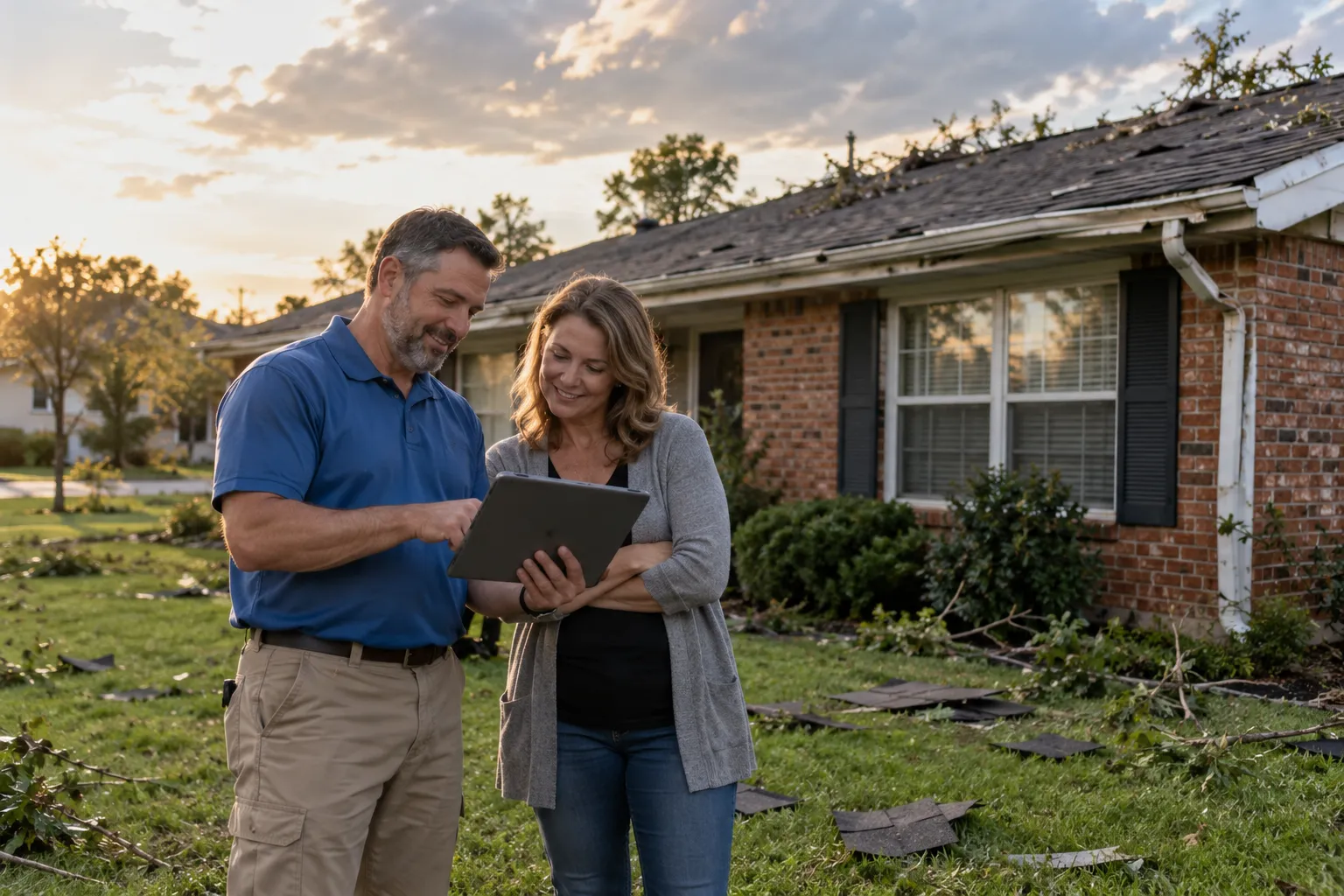
A strong storm can leave a roof looking fine from the yard and failing up close. Hail bruises shingles, wind lifts edges, and heavy downpours find every weak spot. In our part of the country, tropical storm season makes this a real risk, so it helps to know what to do before you pick up the phone.
Mutualhope Roofing is a referral service. We do not do roof work. We connect homeowners with independent local providers in our network who inspect storm damage and quote the work. This page covers what to do first, what to document, how to size up damage, and what to ask before you sign anything. Stay off the roof, take your photos, and get it in writing.
The first rule is simple. Do not climb up to look. Wet shingles are slick, damaged decking can give way, and loose pieces can slide without warning.
Do this instead:
Do not walk on the roof, do not pull at hanging pieces, and do not run a ladder up in wind or rain. A pair of binoculars from the ground tells you plenty.
Photos before phone calls is the habit that saves the most trouble later. Once the weather clears, walk the yard and take wide shots of each side of the house. Then take close shots of anything you can see from the ground.
Capture these:
Keep a simple notebook. Write down when the storm hit, what you saw, and what you did next.
Small openings let water into insulation and decking. In hot, humid weather, that moisture invites mold and rot. Another downpour can turn a minor leak into a ceiling repair.
Storm season in our region also brings repeat weather. A roof that is already weak takes the next hit harder. Acting soon does not mean rushing. It means documenting, then getting a qualified look.
If water is coming in, many providers can place a temporary cover to slow it down. Think of it as a bridge, not a fix. Ask what it covers, how long it should hold, and keep the receipt.
Request a callback to check provider availability if your roof is open to the weather. Then keep your photos handy for the conversation.
Hail bruises shingles, knocks off protective granules and can crack the mat underneath. Soft spots feel like bruises on fruit. Dented vents and gutters are strong clues.
Wind lifts, creases or tears off shingles, especially along edges and ridges. It can also bend flashing, the metal that seals joints.
Fallen limbs can puncture the roof. Heavy rain can push water under loose shingles and past worn seals.
A good provider walks the whole roof, not just one spot. Expect them to check the shingles, flashing, vents, gutters, and the decking where it shows damage. They should also look in the attic for wet insulation or daylight.
Ask for photos of what they find. You should see the damage, not just hear about it. A written report is even better.
It depends on how widespread the damage is and how old the roof is. A few lifted shingles on a young roof are a different story from hail marks across every slope.
Hail damage roof replacement often makes sense when:
A provider should explain their reasoning in plain words and show you the proof. If you only get pressure, step back.
Some policies may cover sudden storm damage. Check your policy for the deductible, and for how it treats wind and hail. Policies differ, so read yours.
Here is a safe order of steps:
Providers can often help document damage for a claim, but the decision belongs to your insurer. Do not sign anything that hands over your claim rights.
After a storm, strangers often knock. Some are honest. Some are not. Treat every offer the same way: slow down.
Do not sign on the spot, pay a large deposit up front, or let someone start work without a written agreement. Do ask for ID, a business address, and proof of insurance. Say thanks, take their card, and compare with local roofing contractors you check yourself.
Get it in writing. For storm damage repair, a clear quote protects you if the job changes.
A provider checks shingles, flashing, vents and gutters, then shows you photos of what they find.
Providers look for bruising, cracked mats and granule loss across each slope.
Lifted edges, creased shingles and bent flashing are checked and noted in writing.
When damage is widespread, providers can quote a full replacement with materials and scope listed.
Prices vary by roof size, pitch, materials and how much damage there is. These are typical U.S. ranges only. Always ask for a written quote before work starts.
| Item | Typical range | Notes |
|---|---|---|
| Storm damage inspection | $150 – $500 | Often tied to the written report |
| Temporary tarp or cover | $300 – $1,500 | Depends on roof size and access |
| Minor storm damage repair | $400 – $3,000 | Limited area, young roof |
| Decking replacement | $70 – $120 per sheet | Added if wood is wet or rotted |
| Asphalt shingle replacement | $6,000 – $16,000 | Common after widespread hail |
| Metal roof replacement | $15,000 – $40,000 | Higher upfront, long lifespan |
Keep off the roof, stay clear of hazards, and check ceilings and the attic from inside.
Take wide and close photos with dates, and write down what happened and when.
Ask for an inspection and a written quote from a local provider in our network.
Review quotes, ask your questions, check your policy, and get it in writing before you sign.
Clear do and do-not guidance helps you avoid falls, scams and rushed choices after a storm.
Photos, notes and receipts make estimates clearer and help any insurance conversation.
Independent providers in our network know regional storms, building styles and permit rules.
Ask questions and compare quotes without pressure to sign. You decide what happens next.
Tell us about your roof and what you have noticed. Send a request, and a provider in our network can follow up about your roof replacement project.
From the ground, look for dented gutters, vents and screens, plus shingle granules in downspouts. Do not climb up. A provider can inspect the roof safely and show you photos of what they find.
Photograph the damage first. Then contact your insurer to learn how to file, and ask a local provider to inspect and document the damage. Some policies may cover sudden damage, so check yours.
Be careful. Some are honest, but pressure is a red flag. Ask for ID, proof of insurance and a written quote. Take time to compare with local roofing contractors you check yourself.
Tell us about your roof and what you have noticed. Send a request, and a provider in our network can follow up about your roof replacement project.
No obligation