Start Your Live Oak Roof Plan
Tell us about your roof and what you have noticed. Send a request, and a provider in our network can follow up about your roof replacement project.
No obligation
Request your roof replacement estimate
Thinking about a new roof in Live Oak? Start with safety and paperwork. Mutualhope Roofing is a referral service. It connects homeowners with independent local roofing contractors who inspect, quote and install. This page explains what you can safely check yourself, what to leave to a provider, and how to get your photos and notes in order before you ask anyone in Live Oak for an estimate.
Some steps are fine for a careful homeowner. Most roof work is not.
Safe from the ground:
Leave to a provider:
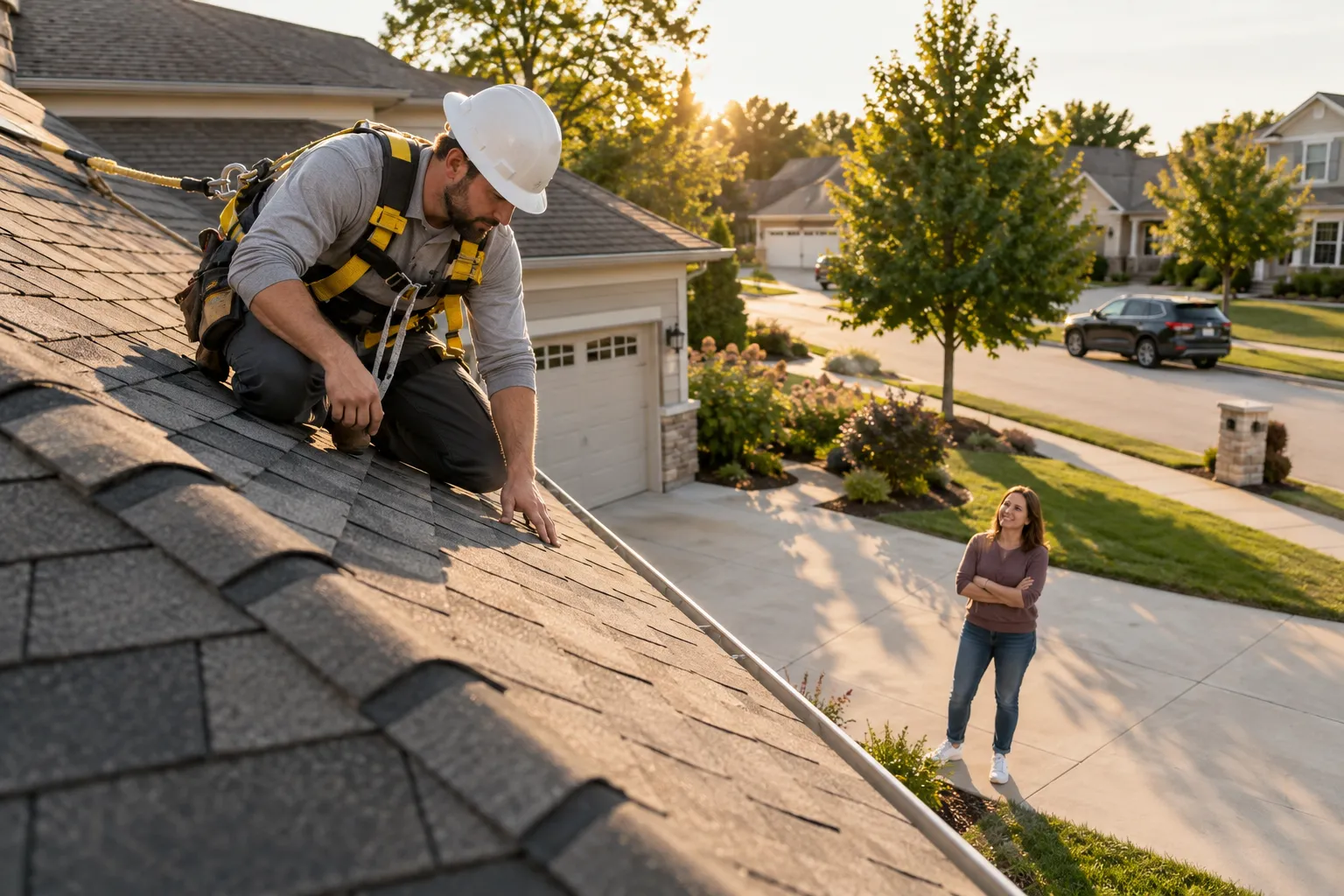
Stay off the roof. In Live Oak, summer sun can make shingles slick and hot, and a fall can change your life. If the roof is near the end of its life, let a provider in our network look at it safely.
A new roof should not fail early. Most early problems trace back to small details. Ask the provider about these before the job starts:
When the job ends, keep your own record. Save the written scope, the material names and photos of the finished roof. Get it in writing. After the first big downpour, check the gutters and ceilings.
Request a callback to check provider availability for your Live Oak home.
Photos before phone calls. This one habit saves arguments later.
Some policies may cover sudden damage, such as a hail or wind event. Slow wear and age usually are not covered. Check your policy, and ask your insurer what it needs. Providers can often help document damage for a claim, but the claim itself is between you and your insurer.
Gather these items:
Do not throw away damaged pieces before you photograph them. Do not sign anything you have not read. Hail damage roof replacement questions are easier when your records are neat.
A roof can look fine from the street and still be in trouble. Watch for these:
Do not press on a soft spot or walk on it. If water is coming in, move belongings, set out a bucket and take photos. Many people search for emergency roof repair at this point. A patch can be a useful pause, but ask the provider if the roof is simply worn out.
Every roof is different, but most jobs follow the same path.
1. Photos and notes. You collect your records. 2. Inspection and written quote. A provider checks the roof and attic, then writes down the scope and price. 3. Choices and scheduling. You pick materials and a start window. Weather can move it. 4. Tear-off and install. Many jobs take a few days on the roof, depending on size and conditions. 5. Cleanup and walk-through. Check the yard for nails, then keep your paperwork.
Ask each provider how they handle sudden rain in the middle of a job. A good answer includes covering the open roof and a plan for rescheduling.
Homes around Live Oak and across the San Antonio area often share a few traits. Many are one-story ranch homes with wide, low roof lines. Brick and vinyl siding means more places where roof meets wall, and those joints need careful flashing. Attics get very hot in humid summers. Some older pier-and-beam houses may have aging wood under the roof covering.
Heavy downpours and tropical storm season add stress. Local roofing contractors tend to know these conditions, and storm damage repair or a full replacement should be planned around them.
Clear do and do-not guidance helps Live Oak homeowners avoid falls, rushed choices and missing records before any provider visits the home.
Providers in our network handle inspections, quotes and installs. Mutualhope Roofing only makes the introduction.
Get it in writing. A clear scope and price lets you compare local roofing contractors fairly and avoid surprises.
Heavy downpours and tropical storms test every roof. Dated photos and notes make your next step calmer and better informed.
Tell us about your roof and what you have noticed. Send a request, and a provider in our network can follow up about your roof replacement project.
Tell us about your roof and what you have noticed. Send a request, and a provider in our network can follow up about your roof replacement project.
No obligation