Need roof repair help in San Antonio?
Tell us about your roof and what you have noticed. Send a request, and a provider in our network can follow up about your roof replacement project.
No obligation
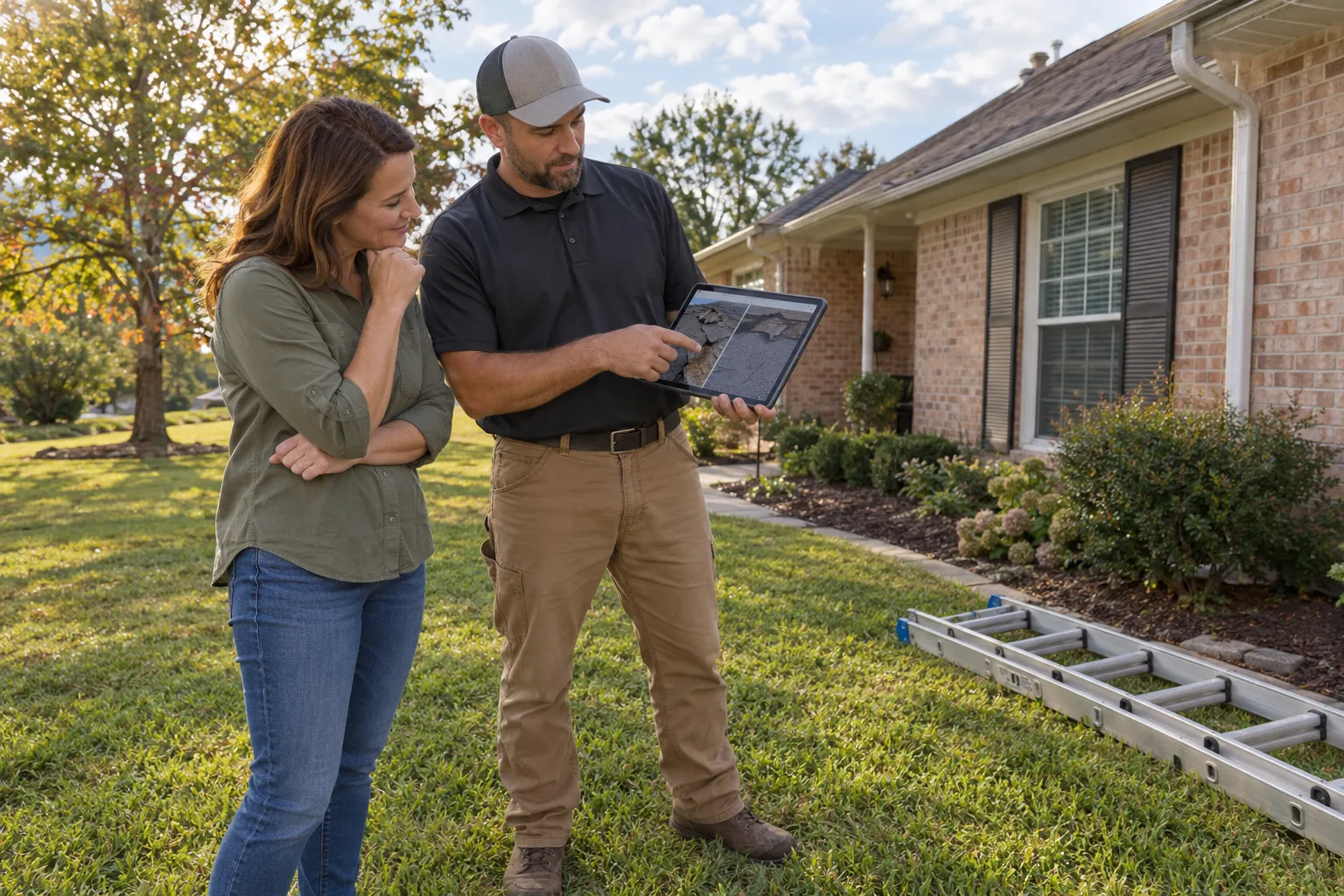
A roof problem feels urgent because it is. Water gets into insulation, drywall and framing faster than most people expect, especially after heavy downpours. This page walks you through what to do first, what to avoid, and how to get your photos and notes in order before anyone climbs a ladder.
Mutualhope Roofing is a referral service. We do not do roofing work. We connect homeowners with independent local providers in our network who inspect the roof, explain what they find and put a quote in writing. Many repair questions turn out to be about an aging roof, so we also help you judge when a patch is enough and when replacement is the safer, steadier choice.
Stay off the roof. Wet shingles, steep pitch and heat-softened surfaces cause serious falls. Do your work from the inside.
Before you contact anyone, take clear pictures. Shoot the stain, the drip, the wet floor and any damaged ceiling. Add a wide shot of each room. Note the date and what the weather was doing. These images help a provider understand the problem and help you if you later talk to your insurer.
Some situations cannot wait for a convenient week. A tree on the roof, a large section peeled back, or water pouring through a ceiling all call for fast action. In those cases, emergency roof repair usually means a temporary cover to stop more water from entering. Availability varies by provider and by how busy the weather has made everyone. Request a callback to check provider availability in your area.
A drip is rarely the whole story. Water runs along rafters and decking before it drops, so the stain on your ceiling may sit feet from the real opening. Our hot, humid summers keep that moisture from drying out. Attics that bake all day then trap damp air, which feeds mold and softens wood. Tropical storm season adds hard rain that finds every weak spot at once.
Being organized makes every later step easier. Start a folder on your phone or in a notebook.
Some policies may cover sudden damage, but wear and age are often treated differently. Check your policy before you decide anything. Providers can often help document damage for a claim. Do not sign anything that hands over control of your claim until you have read it carefully.
Most repair visits fall into a few groups:
Not every provider takes small patch jobs. Some focus on full roof work. Ask early so you are not surprised.
A good inspection starts inside. The provider checks the attic for damp wood, dark trails and wet insulation. Then they look at the roof surface, paying close attention to flashing, vents, valleys and nail lines. Sometimes they run water over one area at a time to trace the path. Expect them to show you photos of what they find. If they cannot explain where the water enters, ask for a second look.
This is the question that saves or costs you the most money. A repair makes sense when the roof is fairly young and the damage is limited to one spot. Replacement deserves a hard look when you see several of these signs:
Repeated patching can add up to a large bill without fixing the cause. A new roof gives you one clean system and a written warranty from the provider. Request an estimate that prices both options side by side.
A temporary fix should buy you time, not replace a proper repair.
Asphalt shingles are the most common and the easiest to patch. Metal roofs leak mostly at fasteners and seams. Tile can crack underfoot and needs special handling. Low-slope sections over porches or additions fail at seams and drains. Older pier-and-beam houses may also have older decking that needs a closer look. Brick and vinyl siding do not change the roof, but wall-to-roof joints deserve extra attention.
Local roofing contractors know the weather here and often respond faster when storms hit. Still, check before you commit.
A good answer is specific and comes with paperwork. Vague answers are a warning.
Get it in writing, every time.
A provider checks the attic and roof surface to trace where water actually enters your home.
You receive a clear scope and price on paper before any work begins.
Providers explain whether a patch is reasonable or whether the roof is near the end.
Providers can often help document damage with photos and notes that you can share with your insurer.
These are typical U.S. ranges. Your price depends on roof size, pitch, materials and how much hidden damage is found. Treat them as a starting point and always ask for a written quote before work begins.
| Item | Typical range | Notes |
|---|---|---|
| Small shingle patch | $150 – $1,000 | Limited area, easy access |
| Flashing repair | $200 – $1,500 | Chimneys, walls, skylights |
| Vent boot replacement | $150 – $600 | Common leak spot around pipes |
| Section replacement | $500 – $3,000 | Depends on decking damage |
| Temporary tarp | $300 – $1,500 | Stops water until repair |
| Full asphalt roof replacement | $6,000 – $15,000+ | Compare when repairs keep returning |
Move belongings, set out buckets, stay off the roof, and keep clear of wet ceilings and fixtures.
Take dated photos and write down when the leak started and what the weather was doing.
Ask a local provider to inspect the attic and roof and explain the findings.
Review repair and replacement options on paper before you choose a provider to move forward.
Clear do and do-not guidance helps you protect your family and avoid risky roof climbs.
Photos and notes in hand make estimates faster and insurance talks smoother.
Independent providers in the network know the humid, storm-prone weather in your area.
You hear when a patch is enough and when replacement makes better sense.
Tell us about your roof and what you have noticed. Send a request, and a provider in our network can follow up about your roof replacement project.
No. Stay off the roof. Wet and heat-softened surfaces cause serious falls. Check the attic with a flashlight if it is safe, take photos from the ground, and let a provider inspect the roof.
A repair fits a fairly young roof with one damaged spot. If shingles are curling, leaks appear in several places, or patches keep failing, ask a provider to quote replacement too.
Some policies may cover sudden damage, but age and wear are often treated differently. Check your policy, keep photos and notes, and ask a provider to help document the damage.
Tell us about your roof and what you have noticed. Send a request, and a provider in our network can follow up about your roof replacement project.
No obligation